Table of Contents
Quick Answer: 1099 vs Bank Statement Loan
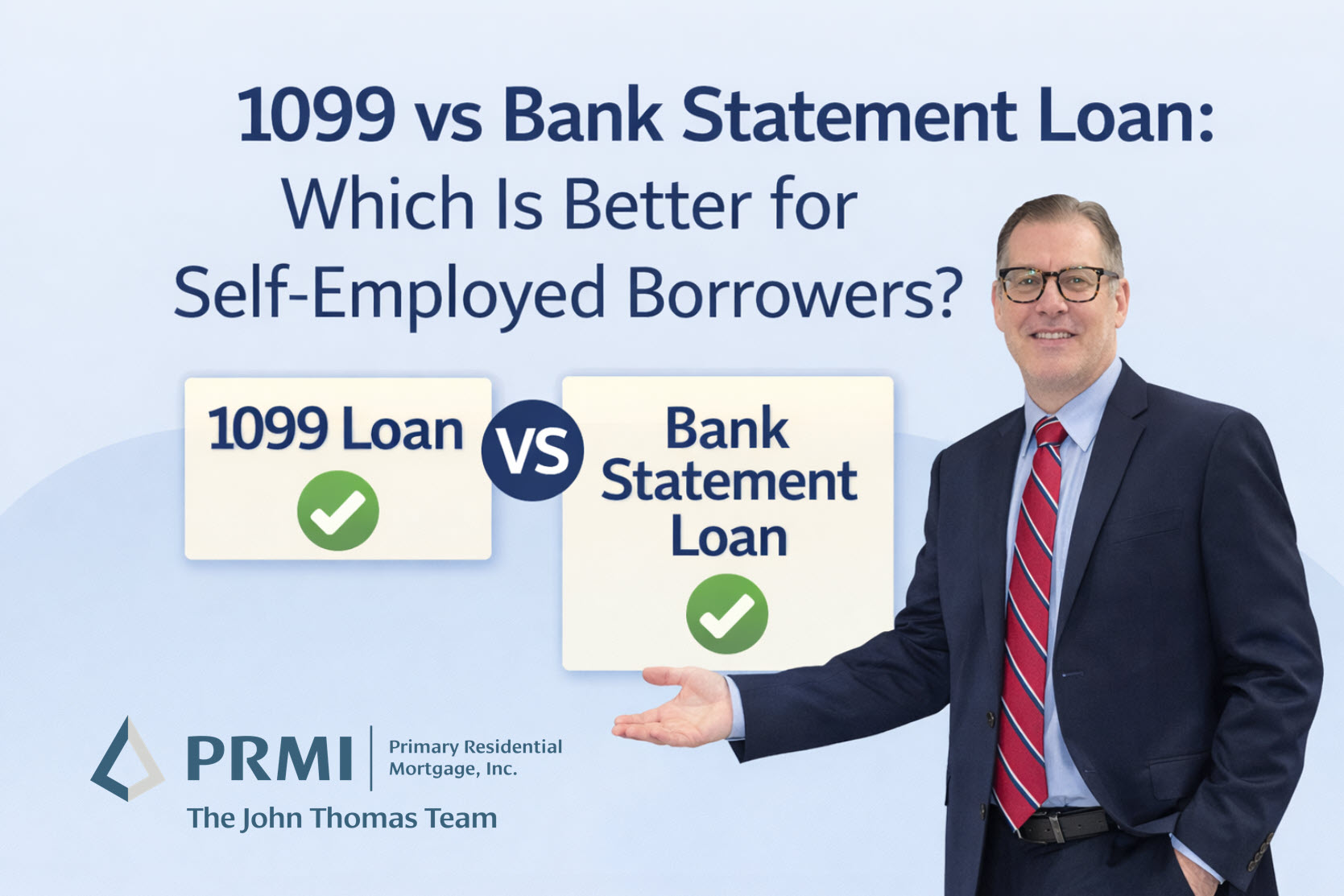
A 1099 mortgage loan uses your reported 1099 income to qualify, while a bank statement loan uses your actual bank deposits over time. The best option depends on how your income is structured and how it is documented.
Understanding the Difference
Self-employed borrowers often have multiple ways to qualify for a mortgage, but the two most common options are 1099 loans and bank statement loans.
Both fall under Non-QM lending, but they evaluate income very differently. Got questions? Call Loan Officer John Thomas at 302-703-0727 or APPLY ONLINE.
1099 Mortgage Loan
A 1099 loan focuses on your gross income reported on your 1099 forms. This is often ideal for:
- real estate agents
- commission-based professionals
- independent contractors
Because it does not rely on tax returns, it can provide a higher qualifying income in many cases.
? Learn more about 1099 mortgage loans here:
https://delawaremortgageloans.net/1099-mortgage-loan-program/
Bank Statement Loan
A bank statement loan evaluates income based on deposits over 12 to 24 months. This is typically better for:
those without reliable 1099 income
business owners
borrowers with consistent deposits
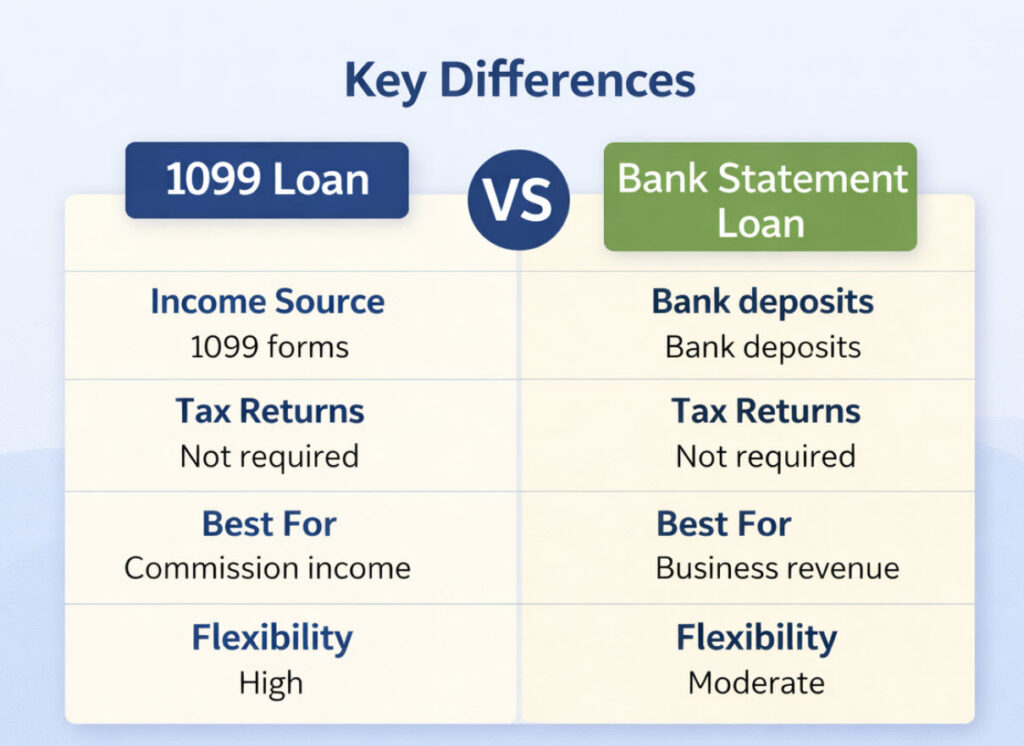
| Feature | 1099 Loan | Bank Statement Loan |
|---|---|---|
| Income Source | 1099 forms | Bank deposits |
| Tax Returns | Not required | Not required |
| Best For | Commission income | Business revenue |
| Flexibility | High | Moderate |
Which Loan Is Better?
The answer depends on how your income is structured.
- If your 1099 income is strong ? 1099 loan is usually better
- If your deposits are stronger ? bank statement loan may be better
Local Expertise Matters
Working with a loan officer experienced in Non-QM loans in Delaware and Maryland can help you determine which program gives you the strongest approval outcome.
Why Trust This Information
This article was written by Loan Officer John Thomas, a Delaware-based mortgage loan officer and Non-QM specialist with over 20 years of experience helping self-employed borrowers qualify for home loans.
What is the difference between a 1099 loan and a bank statement loan?
A 1099 loan uses income reported on 1099 forms to qualify, while a bank statement loan uses actual deposits over a 12 to 24 month period. The main difference is how income is calculated, which can significantly impact how much a borrower qualifies for.
Which is better, a 1099 loan or a bank statement loan?
The better option depends on how your income is structured. A 1099 loan is often better for commission-based borrowers with strong 1099 income, while a bank statement loan may be a better fit for business owners with consistent deposits.
Can I qualify for a mortgage using 1099 income?
Yes, many lenders offer 1099 mortgage loan programs that allow self-employed borrowers and independent contractors to qualify using their 1099 income instead of traditional tax returns.
Do bank statement loans require tax returns?
No, bank statement loans typically do not require tax returns. Instead, lenders review 12 to 24 months of bank statements to calculate qualifying income based on deposits.
Who should use a 1099 mortgage loan instead of a bank statement loan?
A 1099 mortgage loan is best for borrowers whose income is clearly documented through 1099 forms and may not be fully reflected on tax returns due to deductions. This includes real estate agents, freelancers, and commission-based professionals.

Not Sure Which Option Is Right for You?
Every self-employed borrower’s situation is different, and the best loan option depends on how your income is structured.
If you’re trying to decide between a 1099 loan and a bank statement loan, we can walk through your income and show you which option may give you the strongest approval — without guessing.
? You can review how 1099 mortgage loans work here:
https://delawaremortgageloans.net/1099-mortgage-loan-program/
Or if you’d prefer to talk it through, feel free to reach out directly at 302-703-0727 and we can go over your situation step by step or APPLY ONLINE