Renovation Lending Guide

Renovation Lending: Buy & Renovate With One Loan (FHA, VA, USDA, Conventional)
Straightforward Answer: Renovation loans help you to buy or refinance a house while rolling renovation costs into one single loan. Some options are FHA 203(k) Limited and Standard, Fannie Mae HomeStyle, Freddie Mac CHOICERenovation, VA Alterations & Repair, and USDA Renovation. The right loan for you will depend on factors like your credit score, your down payment, the type of home, and how much work the renovation needs.
A lot of people believe they need two different loans for a fixer-upper: one for purchasing the home and another for repairs. That idea is not correct.
Renovation loans also known as rehab loans, let you combine the cost of buying (or refinancing) a home with the expenses for renovations into a single loan. You go through one closing process, and your contractor gets payments in phases as they finish the work. To get started, call Loan Officer and Renovation Loan Expert John Thomas at 302-703-0727 or APPLY ONLINE.
Jump to a section:
- What is renovation lending?
- Renovation loan types explained
- FHA 203(k) Limited vs Standard
- Fannie Mae HomeStyle renovation loan
- Freddie Mac CHOICERenovation
- VA Alterations & Repair renovation loans
- USDA renovation loans
- How renovation loans work step-by-step
- Pros and cons
- Common myths
- FAQs
- Talk to John Thomas
What Is Renovation Lending?
Renovation lending uses a home loan based on how much the house will be worth after repairs often called its “After-Repaired Value” or ARV. This is important because most fixer-uppers won’t qualify for a traditional mortgage loan until after the repairs are completed. This means without a renovation loan, the seller would have to make the repairs before the buyer could close with a traditional loan.
A renovation Loan lets you:
- Purchase a home that needs work to be done
- Finance repairs and upgrades into the mortgage loan
- Make just one monthly mortgage payment each month instead of multiple loans
Keep in Minda: Each program comes with specific rules about what kinds of repairs are allowed how contractors get approval, and the way funds are distributed.
Renovation Loan Types Explained
The following are the renovation loan options available today that I assist buyers and homeowners to use.
- FHA 203(k) Limited (Used for smaller projects that don’t involve structural work)
- FHA 203(k) Standard (Meant for larger projects and can include structural changes)
- Fannie Mae HomeStyle Renovation (type of conventional renovation loan)
- Freddie Mac CHOICERenovation (another type conventional renovation loan)
- VA Alterations & Repair / VA renovation (100% financing for eligible veterans and military borrowers)
- USDA Renovation (available in eligible rural areas and subject to income limits)
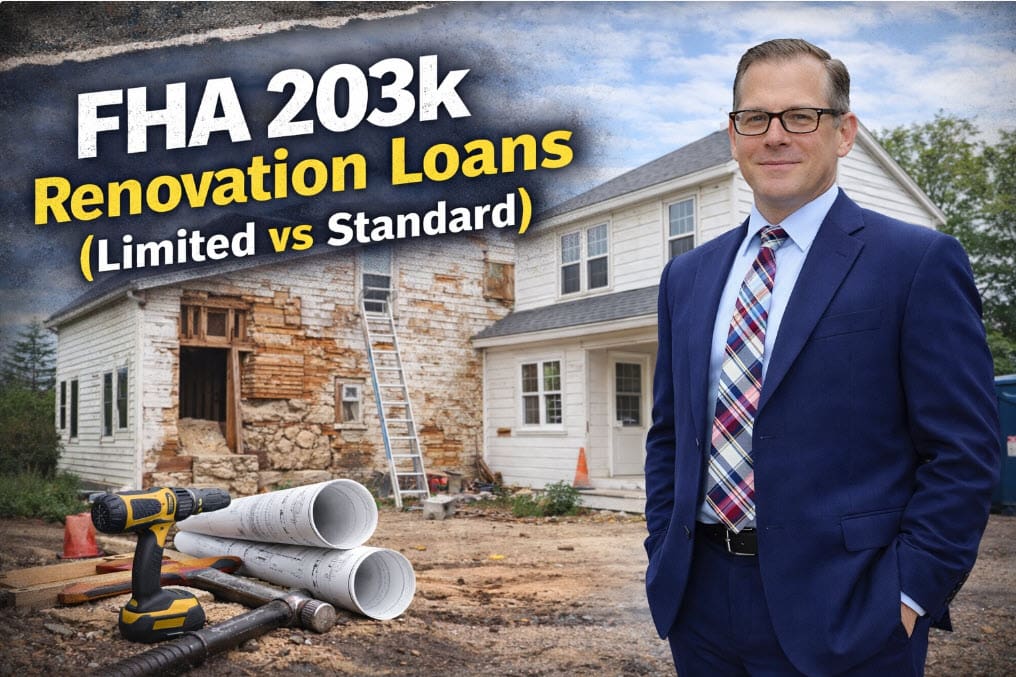
FHA 203(k) Renovation Loans (Limited vs Standard)
FHA 203(k) loans are a popular choice for fixing up primary residences only. They work well for buyers who need more flexible credit options and aim to include repair costs within their mortgage. The FHA 203k Rehab loan program can be used to purchase a fixer upper or to refinance your current home.
FHA 203(k) Limited
The Limited 203(k) is used for smaller projects that do not require major structural changes and are limited to a maximum renovation loan amount of $75,000.
Common examples:
- Replacing Flooring
- Painting
- Installing or Updating Appliances
- Minor renovations in kitchens or bathrooms
- Repairs that are Non-structural
FHA 203(k) Standard
The Standard 203(k) is designed for larger renovation projects and can allow more complex repairs, including structural work with the appropriate permits and approvals.
Some Common examples:
- Adding New Rooms
- Major kitchen renovations
- Structural repairs (when permitted)
- Major systems upgrades (HVAC, plumbing, electrical)
Read John’s Complete FHA 203(k) guide here: FHA 203(k) Rehab Loans
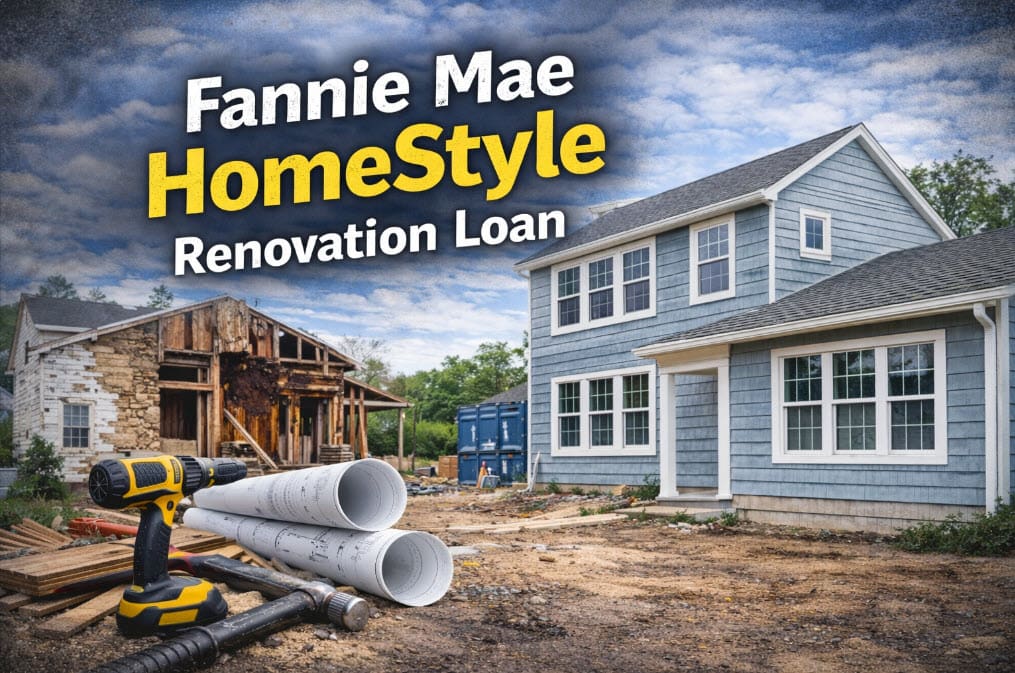
Fannie Mae HomeStyle Renovation Loan (Conventional)
The HomeStyle Loan is a conventional renovation loan option. It is a good choice if you prefer a conventional mortgage and flexible renovation choices.
HomeStyle is commonly used for:
- Primary residence purchase or refinance
- Second homes or Vacation Homes for purchase or refinance
- Investment properties for Purchase or Refinance
Why Borrowers Choose a HomeStyle Renovation Loan:
- It’s a conventional loan option without the Upfront FHA Mortgage Insurance
- It can work well for larger renovation budgets
- It allows for 2nd homes and investment properties which FHA does not
- Conventional Loan Limits are higher than FHA Loan Limits so allows for higher priced homes
Read John’s Complete HomeStyle Loan guide here: Conventional HomeStyle Renovation Loan
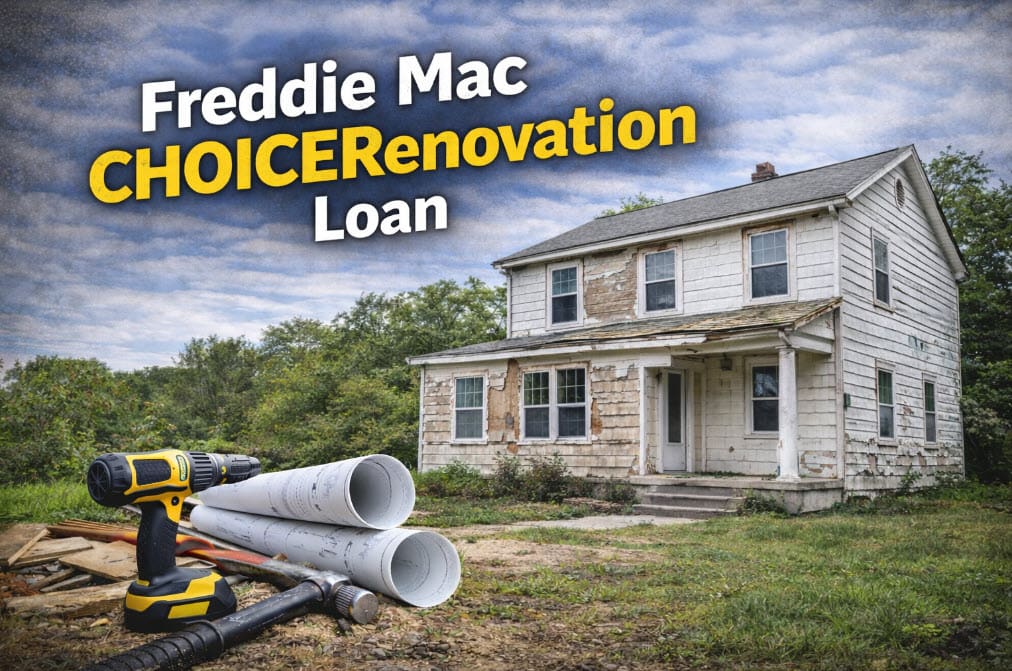
Freddie Mac CHOICERenovation (Conventional)
Freddie Mac CHOICERenovation is another conventional renovation loan option designed to finance a purchase or refinance plus renovation costs in one loan with all renovations completed after closing.
CHOICERenovation Loans are a great option for the following:
- You prefer a conventional loan for renovation needs
- One closing for buying and renovating or refinancing and renovating
- You need a solution to fund upgrades that boost a home’s long term value
- You need to use a lower student loan payment calculation than Fannie Mae’s 1%
Read John’s Complete CHOICERenovation Loan guide here: Conventional CHOICERenovation Loan
VA Renovation Loans (VA Alterations & Repair)
For eligible veterans, active-duty borrowers and surviving spouses, a VA renovation loan (often structured under VA Alterations & Repair) allows you to finance repairs and improvements with a VA mortgage with 100% financing.
Common reasons VA borrowers use renovation financing:
- Buy a home that needs repairs but has strong long-term potential
- Update safety items and major systems
- Improve livability without taking a separate loan
- Complete Minimum Property Requirement Repairs the Seller is NOT willing to make
- Buy and Renovate a Home with 0% down payment
Read John’s VA renovation guide here: VA Renovation Loan

USDA Renovation Loans
A USDA renovation loan can be an option for buyers purchasing in USDA eligible rural areas who meet USDA income and occupancy requirements. USDA financing is designed only for primary residences.
USDA renovation may help when:
- You want to buy in a USDA-eligible area with 100% financing and no down payment
- The home needs repairs to meet basic livability standards
- You want to finance improvements without separate funding
Read John’s USDA renovation guide here: USDA Renovation Loan
Quick Comparison: Which Renovation Loan Fits Best?
| Program | Best For | Notes |
|---|---|---|
| FHA 203(k) Limited | Smaller repairs, non-structural updates | Primary residence focus; renovation process required |
| FHA 203(k) Standard | Major remodels and larger repair scopes | More steps; larger projects; tighter oversight |
| Fannie Mae HomeStyle | Conventional renovation structure and flexibility | Can be a strong option when conventional pricing fits |
| Freddie Mac CHOICERenovation | Conventional renovation financing with one closing | Great to compare side-by-side with HomeStyle |
| VA Renovation (A&R) | Eligible veterans needing repairs financed | VA eligibility required; lender overlays may apply |
| USDA Renovation | Eligible rural areas + borrower income guidelines | Primary residence; area and income rules apply |
How Renovation Loans Work (Step-by-Step)
Most renovation loans follow a similar process. Here’s the simple version:
- Strategy call and pre-approval plan — We match the right renovation program to your goals.
- Offer accepted (or refinance review) — We confirm the renovation scope is eligible for the loan type.
- Contractor bids and documentation — The lender needs written estimates and contractor details.
- Appraisal based on “as-improved” value — The appraiser considers the planned improvements.
- Closing — You close one time on the mortgage.
- Renovation funds are held in escrow — Money is released in stages (draws) as work is completed.
- Final inspection and completion — Once work is finished, the file is cleared and the project closes out.
Tip: Renovation loans are very doable, but they require a clean plan. The contractor, timeline, and paperwork matter.
Pros and Cons of Renovation Lending
Pros
- Buy a home with problems that other buyers avoid
- Finance improvements without draining savings
- Build equity sooner by improving value
- One loan and one payment instead of multiple loans
- Save deals that have lender required repairs from the appraisal that the seller is not willing or not able to make prior to closing.
Cons
- More paperwork than a standard mortgage
- Contractor rules and timelines can be strict
- Draw process requires coordination and inspections
- Not every property is a good renovation-loan fit
Common Renovation Loan Myths (And the Truth)
Myth #1: “Renovation loans are only for big flips.”
Truth: Many people use renovation loans just to make a home safe, functional, and updated.
Myth #2: “I can close fast with any contractor.”
Truth: Contractor paperwork is a common delay. If your contractor is slow to provide documents, your closing can get pushed.
Myth #3: “The lender gives me the renovation money directly.”
Truth: Renovation funds are usually held in an escrow account and paid out in draws after inspections.
Myth #4: “Any repair is allowed on any loan.”
Truth: Each program has rules. Some upgrades are allowed on conventional renovation loans that may not fit FHA/VA/USDA guidelines.
Serving Homebuyers Nationwide (Including Delaware & Maryland)
John Thomas lends in every U.S. state except New York (through PRMI). If you’re buying in Delaware, New Jersey, Pennsylvania, Virginia or Maryland, renovation financing can be a smart way to compete for homes that need work—especially when move-in ready homes are priced at the top of the market.
If you’re local, we can also talk through area-specific concerns like:
- Older housing stock (roof, systems, moisture concerns)
- Appraisal expectations on as-improved value
- Contractor availability and timelines
Renovation Lending FAQs (Schema-Friendly)
What is renovation lending?
Renovation lending lets you combine the home purchase (or refinance) and renovation costs into one mortgage based on the home’s value after improvements.
What is the difference between FHA 203(k) Limited and Standard?
Limited 203(k) is for smaller, non-structural repairs. Standard 203(k) is for larger projects and can include more complex renovations with added oversight.
Can I buy a fixer-upper with one loan?
Yes. FHA 203(k), HomeStyle, CHOICERenovation, VA renovation options, and USDA renovation loans can combine purchase and repairs into one mortgage.
What is a HomeStyle renovation loan?
HomeStyle is a conventional renovation loan option that finances the home purchase or refinance plus renovation costs in one loan.
What is Freddie Mac CHOICERenovation?
CHOICERenovation is a conventional renovation loan option that combines purchase or refinance with renovation costs, based on the as-improved value.
Do VA renovation loans require a down payment?
Many VA borrowers may be eligible for low or no down payment, depending on entitlement and lender requirements. Eligibility and structure matter.
Are USDA renovation loans only for rural areas?
USDA requires the property to be in an eligible area and the borrower to meet income and occupancy guidelines. Some suburban areas still qualify.
How are renovation funds paid out?
Renovation funds are typically held in escrow and released in draws as work is completed and inspected.
What is the first step to getting a renovation loan?
Start with a renovation loan strategy call to match the right program to your property, renovation scope, contractor plan, and your credit and income profile.
Related Renovation Loan Guides by John Thomas
- FHA 203(k) Rehab Loans
- VA Renovation Loan
- Conventional HomeStyle Renovation Loan
- Conventional CHOICERenovation Loan
- USDA Renovation Loan

Ready to See If a Renovation Loan Works for You?
Renovation loans are powerful, but only when they’re structured correctly from the start. The loan program, contractor setup, renovation budget, and appraisal plan all matter. Small mistakes can delay closings or derail deals. APPLY ONLINE
John Thomas specializes in renovation lending and helps buyers and homeowners:
- Choose the right renovation loan for their situation
- Structure repairs so they meet lender and appraisal rules
- Avoid common contractor and draw-schedule issues
- Understand true cash-to-close before making an offer
- Turn fixer-uppers into smart long-term investments
Your next step: Book a short renovation loan strategy call.
We’ll review your goals, the property, the renovation scope, and the best loan option (FHA 203(k), HomeStyle, CHOICERenovation, VA, or USDA). No pressure. Just clear answers and a real plan.
Call to action: Schedule your renovation loan consult
Disclaimer: Loan guidelines vary by program, lender overlays, and borrower qualifications. This page is educational and not a commitment to lend. Ask for a personalized review based on your goals and property.