(302) 703-0727

(302) 703-0727

Free Real Estate Investment Seminar May 16th – Getting Started in Real Estate

John Thomas April 24, 2007 Tags:

Free Real Estate Investment Seminar May 16th – Getting Started in Real Estate

Free Real Estate Investment Seminar on Wednesday May 16th from 6:30 PM to 8:30 PM at Primary Residential Mortgage, Inc.  The Seminar is for New Real Estate Investors.  The seminar will show participates how to analysis potential investments, how to acquire the proper financing, what loan programs are available for investors with the current mortgage market, and much more.  Each participate will receive a Free Audio CD on Real Estate Investing and a Free Investors Kit which includes most forms needed to get started in Investing.  Please Call 302-703-0727 to register.  The seminar will be at 42 Reads Way, New Castle, DE 19720. Keep Reading...

Five Factors of Credit Scoring

John Thomas April 23, 2007 Tags:
featured image

Five Factors of Credit Scoring

Five Factors of Credit Scoring

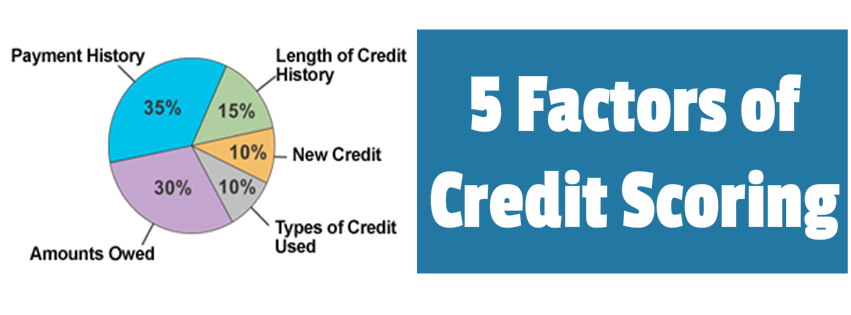
FICO (Fair Isaac Company) has shared information regarding the credit scoring model and have established that there are five factors of credit scoring which are listed below:

Payment History has a 35% impact. Paying debt on time and in full has a positive impact on your credit score.  Paying items late or getting serious payment issues such as judgments, collections, repossessions, and charge-offs have a negative impact on your credit score.  The best thing you can do for your credit score is to make your monthly payments on time each month.

Outstanding Credit Balances have a 30% impact. Debt ratio of outstanding balance to available credit is important.  Keeping that below 50% is wise and below 30% even wiser. It is never a good idea to close an account; the debt ratio will go up and the number of seasoned lines will decrease. Pay outstanding debt down as close to zero as possible and evenly redistribute the remaining balance among the open lines. The increased interest incurred by moving a balance from a 0% card to a 23% card will be minimal relative to what the increased mortgage debt might be with a low credit score. Hitting the maximums of available credit can be very negative. It may be worth calling and asking the credit company to increase your available credit to lower the debt ratio, provided they can do so without a hard credit inquiry.

Length of Credit History has a 15% impact. The length of time a particular credit line has been opened is important. A seasoned borrower is stronger.  Opening new credit cards will decrease the average length, and therefore hurt this portion of the score.

Type of Credit has a 10% impact. A mix of auto loans, credit cards, and mortgages are positive, rather than a concentration in credit cards only.  Careful, too, when getting credit at a store that is not a department store: the credit agencies frown on cards for more specialized stores where you are likely to only make one purchase, as they seem to show desperation.

New Credit has a 10% impact. Hard inquiries for credit will negatively impact the score. Auto and mortgage inquiries receive special treatment and 20 inquiries can be made in a 14-day period for auto or mortgage and will be treated as only 1 inquiry. The maximum number of inquiries that will reduce the score is 10. Any inquiries beyond that in a six -month period will have no further impact on the borrower. Each hard inquiry can cost 2-50 points on a credit score.  If you check your own credit profile this is considered a “soft inquiry” and will not affect your credit score.

What Factors Don’t Impact My Credit Score?

Factors that are commonly thought to impact your credit score but do not actually have any impact are your income, bank balances, job history, and current employment status.  These items can however have an impact on whether you actually get approved for the credit your applying for but do not have any impact on the credit score itself.  Other factors that do not influence your credit score are the following: Age, Martial Status, debit card usage, prepaid card usage.

What is a Credit Score?

A Credit Score is a 3 digit number used by lenders to evaluate the risk associated with lending money to a consumer.  It is generated by a mathematical model created by Fair Isaac & Company in the 1950s and is commonly called the FICO Scoring model.  There are Three Major Credit Bureaus that are used in most credit decisions which are Equifax, Experian, and Trans Union.   This will give you three credit scores, one from each bureau.  Lenders will use your middle score for determining your risk.  The scores can range from 350 to 850.

How do you apply for a Mortgage Loan?

If you would like to apply for a Delaware Home Loan, you can APPLY ONLINE HERE, you can call the John Thomas Team at 302-703-0727

John R. Thomas – NMLS 38783

Certified Mortgage Planner – Primary Residential Mortgage, Inc.

302-703-0727 DE Office / 610-906-3109 PA Office / 410-412-3319 MD Office

248 E Chestnut Hill Rd, Newark, DE 19713

Shopping Around for the Best Delaware Mortgage Rate?

John Thomas April 13, 2007 Tags:

SHOPPING AROUND?

HERE’S THE INSIDE SCOOP ON HOW TO DO IT RIGHT!

First: make sure you are working with an experienced, professional loan officer. The largest financial transaction of your life is far too important to place into the hands of someone who is not capable of advising you properly and troubleshooting the issues that may arise along the way. But how can you tell?

Here are FOUR SIMPLE QUESTIONS YOUR LENDER ABSOLUTELY MUST BE ABLE TO ANSWER CORRECTLY. IF THEY DO NOT KNOW THE ANSWERS RUN DON’T WALK RUN TO A LENDER THAT DOES! Keep Reading...

Should You Leverage Your Home or Pay It Down Rapidly?

John Thomas April 7, 2007 Tags: , ,

Newark, DE – There is a great debate within the inner-mortgage circles these days. Should we, as loan professionals, encourage clients to borrow as much money as possible? Or would consumers benefit more if we helped them to understand the advantages of 15-year amortization schedules and pre-paying principal? Let’s examine the pros and cons of both strategies.

Leveraging Your Property. In order to understand why you’d want to borrow as much as possible for your home purchase, you must first grasp the concept that equity has a zero rate of return. Here’s an example:

If Consumer “A” buys a home for $300,000, and puts 20% down, then they have $60,000 in equity. Over the next 5 years, the property appreciates $100,000 in value. Consumer “A” now has $160,000 in equity.

Consumer “B” buys a home for $300,000, and puts no money down. At the end of 5 years, that same home is now worth $400,000. Consumer “B” has $100,000 in equity, which is the same appreciation as Consumer “A”, a net $100,000.

As you can see, your down payment has nothing to do with your rate of return. What becomes important is how you choose to manage the $60,000 you didn’t use as a down payment. If you use it for frivolous activities, such as buying toys or going to Las Vegas, it would be more prudent for you to use that money as a down payment. Especially since this will enable you to obtain a lower interest rate.

However, if you were to invest the $60,000 in a vehicle that can out-earn the cost of that debt, then this could be a formula for success. This is why some lending professionals suggest putting as little down as you possibly can, maximizing your tax write-off, and investing the rest. This principle has been applied for many years in the life insurance game. The old saying goes, “Buy term and invest the rest.” The key component is taking the money you would have used as a down payment and creating an asset accumulation account. This account should earn a significant enough rate of return to enable you to pay your mortgage off entirely and achieve the ultimate goal of being debt-free.

Paying Your Home Down Rapidly. There are very few times over the course of my career that I have seen a client with zero debt and no financial difficulties. Choosing to pay off all of your debt can reduce stress and help you to gain freedom of cash flow for investment opportunities. A 15-year mortgage or a bi-weekly payment strategy provides structure. It can also put you on track to have your mortgage paid off within a set timeframe. Simply put, it contains built-in discipline.

It’s important, however, to understand that regardless of how rapidly you pay your home off, you’re not getting any greater rate of return on your investment than if you paid it off slowly.

Conclusion. So how does one determine which scenario is best? The choice depends entirely upon the individual. Savvy consumers who are disciplined, and are comfortable taking chances from an investment perspective, would do well with the first scenario. Over the course of time, it’s been proven that your rate of return over the long-haul will be far greater than the rate you’d pay for a mortgage in today’s rate environment. It’s important to seek the advice of a skilled investment advisor to ensure success with this strategy.

The second scenario is best for those who have a difficult time managing their money or who’ll sleep easier at night knowing they have a plan in place to pay their loan off more rapidly. Be sure that your budget can handle accelerated payments. When consumers “bite off more than they can chew” with a 15-year mortgage, they frequently end up having to refinance back into a 30-year schedule.

If you find this subject intriguing and would like to know more, I recommend that you read a book titled, Missed Fortune by Douglas Andrew. It’s an outstanding read that is very simplistic and goes into far greater detail than I can cover in this column. Douglas is a financial planner who advises safe-structured investments such as whole life policies and tax-free fixed income instruments.

If you want to work with a Professional Mortgage Planner that is experienced in using the concepts outlined in this article and in the book Missed Fortune 101, please feel free to contact me at 302-703-0727.

If you would like to apply for a Delaware Home Loan, you can APPLY ONLINE HERE, you can call John R. Thomas at 302-703-0727.

John R. Thomas – NMLS 38783

Certified Mortgage Planner – Primary Residential Mortgage, Inc.

302-703-0727 DE Office / 610-906-3109 PA Office / 410-412-3319 MD Office

248 E Chestnut Hill Rd, Newark, DE 19713
Financial News for March 2007

John Thomas April 1, 2007 Tags:

Sales of existing homes unexpectedly rose by 3.9% in February, the largest monthly gain in three years, the National Association of Realtors reported March 23. The price of a median home sold last month dropped to $212,800, down by 1.3% from the same month in 2006, marking a record seven straight months that the median home price has fallen.

Construction of new homes and apartments rose 9% in February to a seasonally adjusted annual rate of 1.53 million units, the Commerce Department reported March 20. Construction had fallen by 14.3% in January. Even with the better-than-expected rebound, construction activity remained 28.5% below last year’s level.

Builders’ applications for new permits, considered a reliable gauge of future activity, continued falling in February, dropping by 2.5% to an annual rate of 1.53 million units. That marked the 12th decline in the past 13 months in building permits.

Federal Reserve policymakers announced on March 21 that they would leave the central bank’s key federal funds rate — the rate that banks charge one another for overnight loans — at 5.25%, where it has remained since June 2006.

The Conference Board’s Composite Index of Leading Economic Indicators slipped 0.5% in February. The drop, while expected, was the steepest since February 2006. The index is important because it often foreshadows the performance of the economy over the next six to nine months.

If you would like to apply for a Delaware Home Loan, you can APPLY ONLINE HERE, you can call John R. Thomas at 302-703-0727.

John R. Thomas – NMLS 38783

Certified Mortgage Planner – Primary Residential Mortgage, Inc.

302-703-0727 DE Office / 610-906-3109 PA Office / 410-412-3319 MD Office

248 E Chestnut Hill Rd, Newark, DE 19713

Delaware Real Estate Investment Seminar April 18th

John Thomas March 30, 2007 Tags:

Free Real Estate Invesment Seminar on April 18, 2007 from 6:30 PM to 8:00 PM at Primary Residential Mortgage, Inc.  The Seminar is for New Real Estate Investors.  The seminar will show participates how to analysis potential investments, how to aquire the proper financing, what loan programs are available for investors with the current mortgage market, and much more.  Each participate will recieve a Free Audio CD on Real Estate Investing and a Free Investors Kit which includes most forms needed to get started in Investing.  Please Call 302-703-0727to register.  The seminar will be at 42 Reads Way, New Castle, DE 19720.

If you would like to apply for a Delaware Home Loan, you can APPLY ONLINE HERE, you can call John R. Thomas at 302-703-0727.

John R. Thomas – NMLS 38783

Certified Mortgage Planner – Primary Residential Mortgage, Inc.

302-703-0727 DE Office / 610-906-3109 PA Office / 410-412-3319 MD Office

248 E Chestnut Hill Rd, Newark, DE 19713

How to Establish Good Credit for a Home Loan

John Thomas March 28, 2007 Tags: ,

If you’ve never had credit in your own name, it can be difficult to get a car loan or credit card. Having no credit history can be as much of a problem as having a bad credit history. Students, other young people, and newly divorced or widowed women who have always obtained credit jointly with their husbands often find themselves in this situation.
It seems like a vicious circle: you can’t get credit because you’ve never had credit, but you’ve never had credit because you can’t get credit. What’s a person to do?
Don’t despair. Here are a few tips to help you establish credit in your own name.

  • The best way to establish a credit history is to apply for a small loan or line of credit from your local bank or a credit card from a local department store. Ask whether they report to a credit bureau.  If they don’t, having the card or loan won’t help you establish credit.
  • To get a credit card without a cosigner, you must be at least 18 years old and have a source of steady income. Gas cards are relatively easy to get. Apply for one and use it to establish credit, but pay it off every month to show that you can pay your bills responsibly.
  • If you can’t get a small loan or gas or department credit card on your own, try to find someone to co-sign for you. Again, make payments regularly and on time.
     Increase your chances of getting the loan you’re applying for by coming up with a large down payment. If you don’t have the cash, consider borrowing from a family member.
  • If you don’t have a checking account, open one. You have very little credibility with lenders if you don’t have at least a checking account and preferably a savings account as well.
    Just as importantly, be sure not to overdraw your bank account. Bouncing checks sends a signal to potential lenders that you can’t manage your daily finances and are therefore not a good credit risk.
  • Know what lenders and credit card issuers look for when issuing credit. There are other factors that affect credit approval besides just your payment history, such as how often you move and how often you change jobs. It also helps if you’ve had an apartment or utility in your own name. If you don’t have a telephone number in your own name, you may find it more difficult to get credit.
  • If worse comes to worst, you may find it necessary to get a secured credit card. These cards require you to deposit money in an account to secure the loan or credit limit, and they often have fees and higher interest rates. If you default on your payments, the lender takes the money from your account. After a few months of making payments on time on the secured credit card, you may be able to obtain a regular credit card. Remember to make sure the company reports to a credit bureau before applying for a secured card, or the card won’t help you establish a credit history.
  • Keep Reading...

    Delaware First Time Home Buyer Seminar April 28th from 1:00 – 3:00

    John Thomas March 26, 2007 Tags: ,

    There will be a First Time Home Buyer Seminar on April 28th from 1:00 PM to 3:00 PM at the Primary Residential Mortgage, Inc’s office in New Castle, Delaware.  The Seminar is FREE!!!  Come learn what it takes to buy a home in Delaware.  First time home buyer programs will be covered. Program will also cover how to improve your credit and how to afford a mortgage payment that might be more than your current rental payment.  All registered participates will receive a Free Credit Scoring Audio CD.  Free credit checks will be given at the seminar.  Everybody has the opportunity to receive their complete credit report and get pre-approved to buy a home at the seminar.  You will also have the opportunity to schedule one-on-one appointment with a mortgage professional and credit counselor who can answer questions for your specific situation.  Please call 302-703-0727 to register for this seminar.  The address of seminar is 42 Reads Way, New Castle, DE 19720.

    If you would like to apply for a Delaware Home Loan, you can APPLY ONLINE HERE, you can call John R. Thomas at 302-703-0727 .

    John R. Thomas – NMLS 38783

    Certified Mortgage Planner – Primary Residential Mortgage, Inc.

    302-703-0727 DE Office / 610-906-3109 PA Office / 410-412-3319 MD Office

    248 E Chestnut Hill Rd, Newark, DE 19713